
By Sutter Roofing Systems · 2026-08-23 · 5 min read
Most homeowners never get up on their own roof. So when the crew packs up and the invoice arrives, you are judging a five-figure roof replacement from the driveway — where every new roof looks the same.
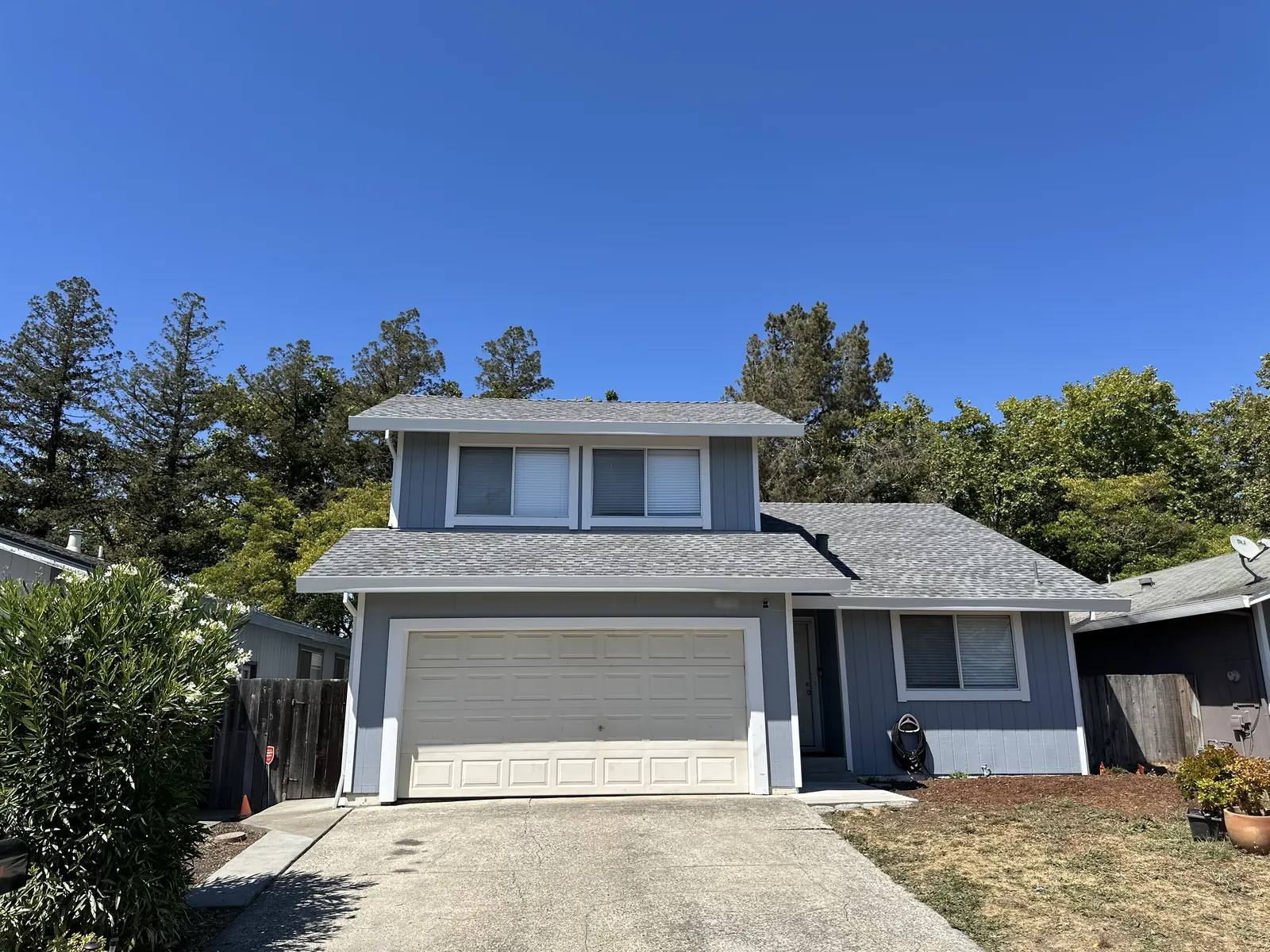
It should not work that way. Here is a full roof replacement we finished on a two-story home in Rohnert Park, CA — one of the thousands of 1970s tract homes here now reaching the end of their original roof's life. We photographed it the day we wrapped, and we are using it to show you the six things worth walking out and checking on any finished roof, whoever installs it.
1. Ridge and hip lines that run dead straight
Start with the lines. Ridges and hips are where a roof's workmanship shows first — they are the highest-contrast edge on the whole assembly, and any wander in the courses telegraphs straight down the slope. A crew that rushes the layout gets waves you can see from the sidewalk for the next 25 years.
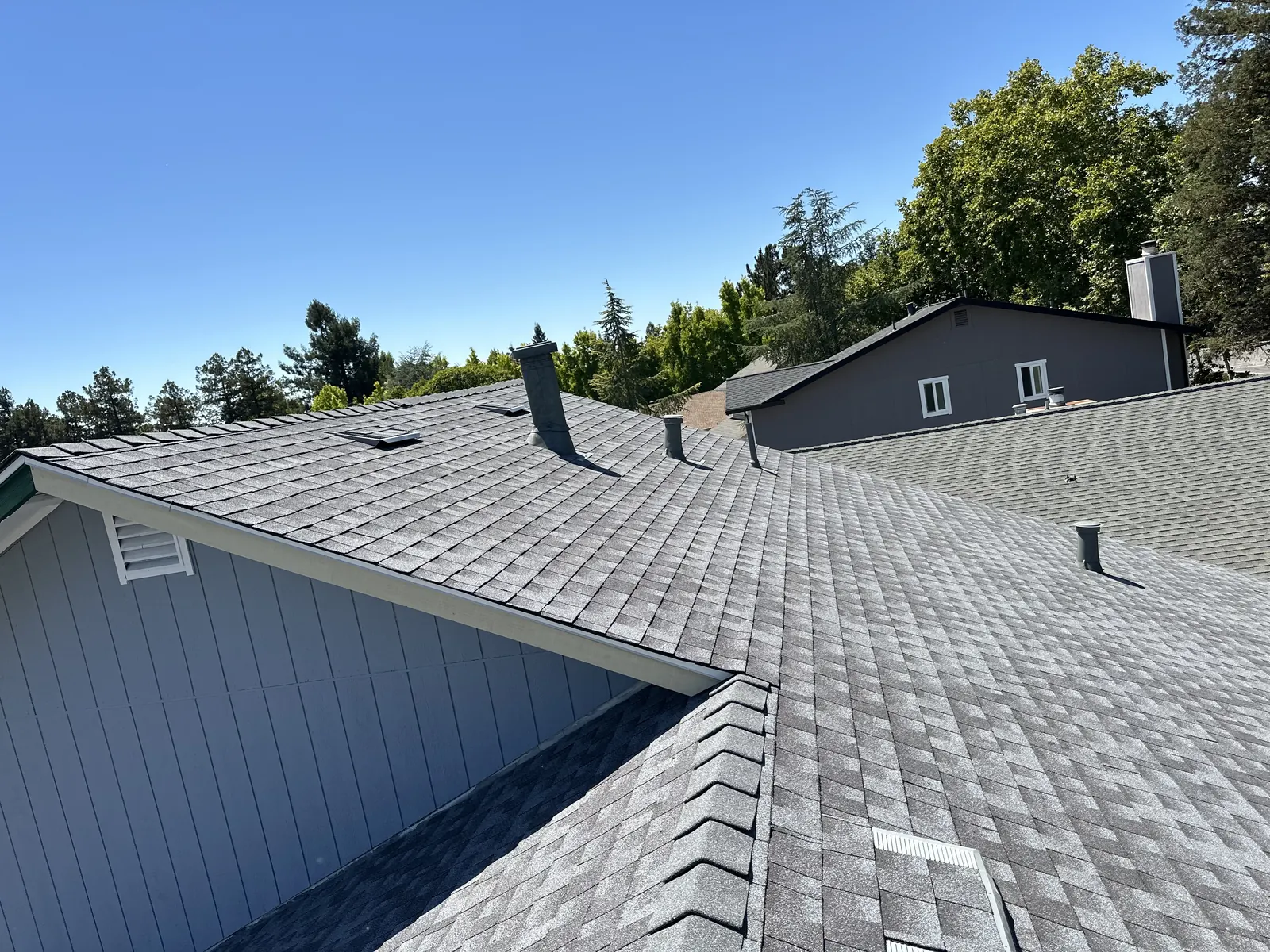
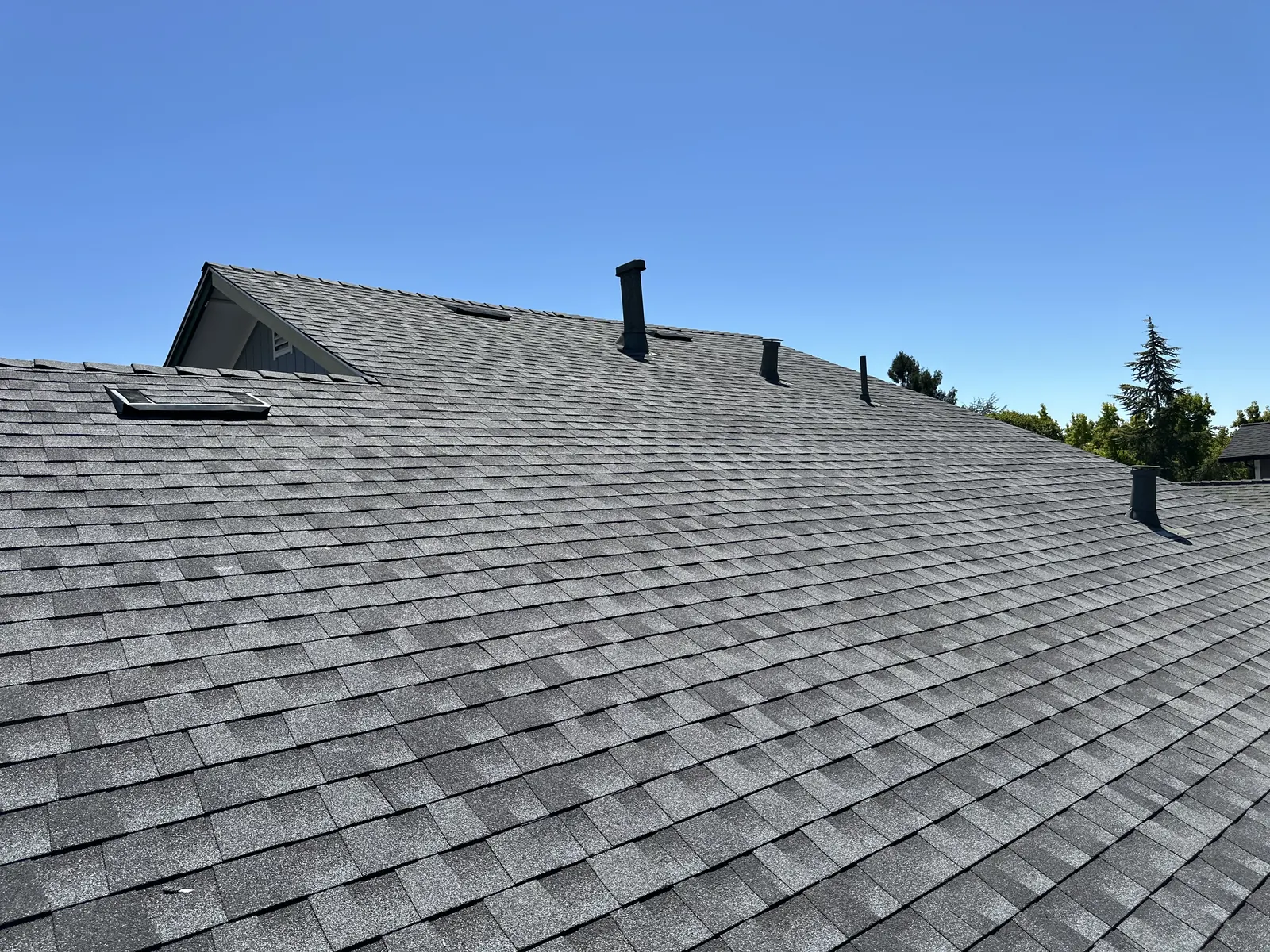
Stand at the corner of the house and sight down each ridge. It should read as one clean line, with the cap shingles evenly spaced and no dips where two planes meet.
2. Every pipe and vent gets a new boot, not a bead of sealant
Roof penetrations are where roofs actually leak. Plumbing vents, furnace flues and exhaust boots all pass straight through the waterproof layer, and the rubber collars on them dry-rot years before the shingles wear out. Replacing them is cheap during a re-roof and expensive after.
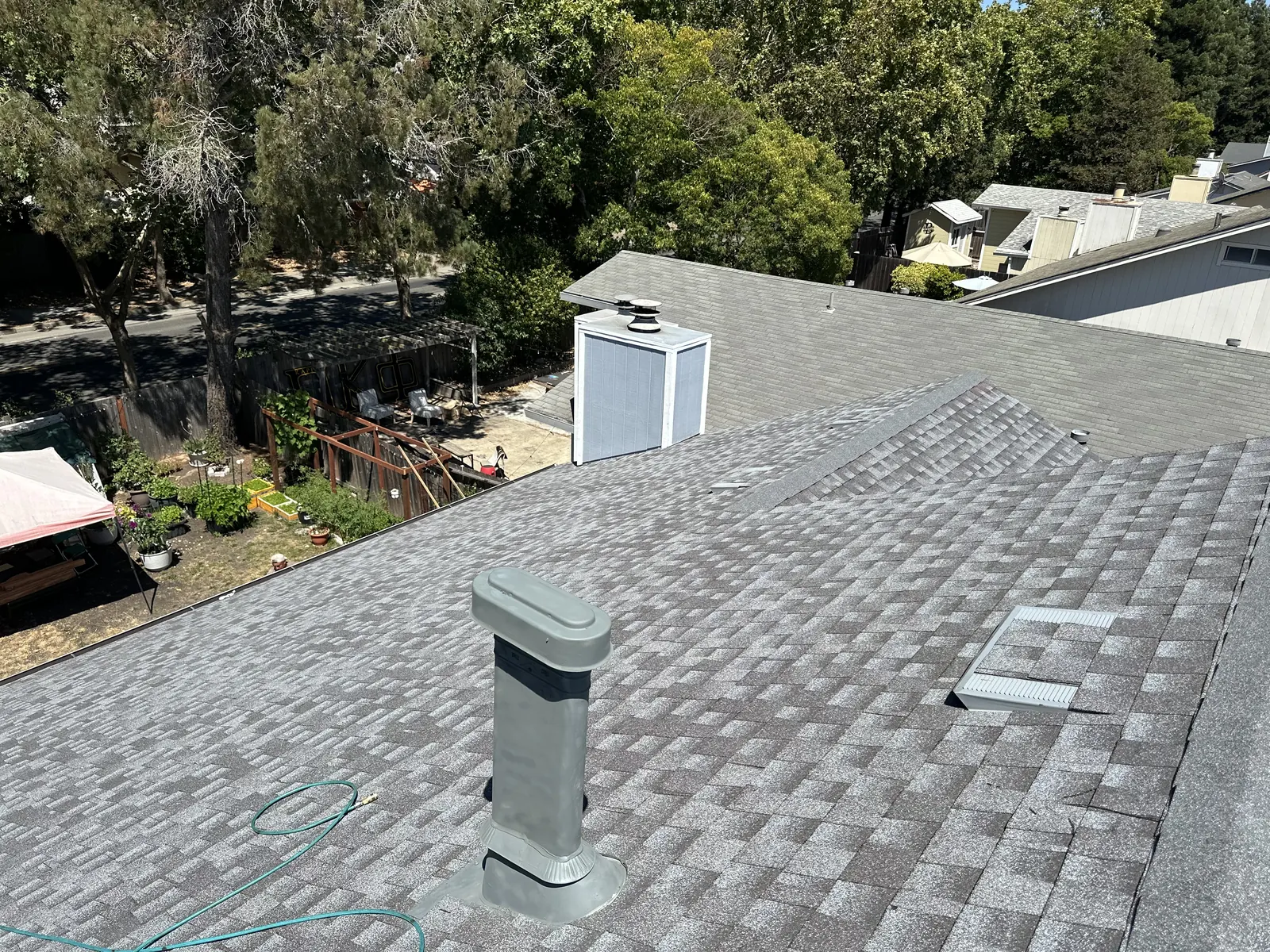
If a bid does not itemize new boots and flashings, ask why. Reusing old ones is the most common corner cut on a budget re-roof — and it is the reason plenty of "new" roofs are back in for roof repair inside five years.
3. Ventilation that is actually balanced
A roof is a system, not a surface. Without balanced intake and exhaust, summer attic temperatures in Sonoma County climb high enough to cook shingles from underneath and shorten the life of the roof you just paid for — and in winter that same trapped moisture is what rots decking.
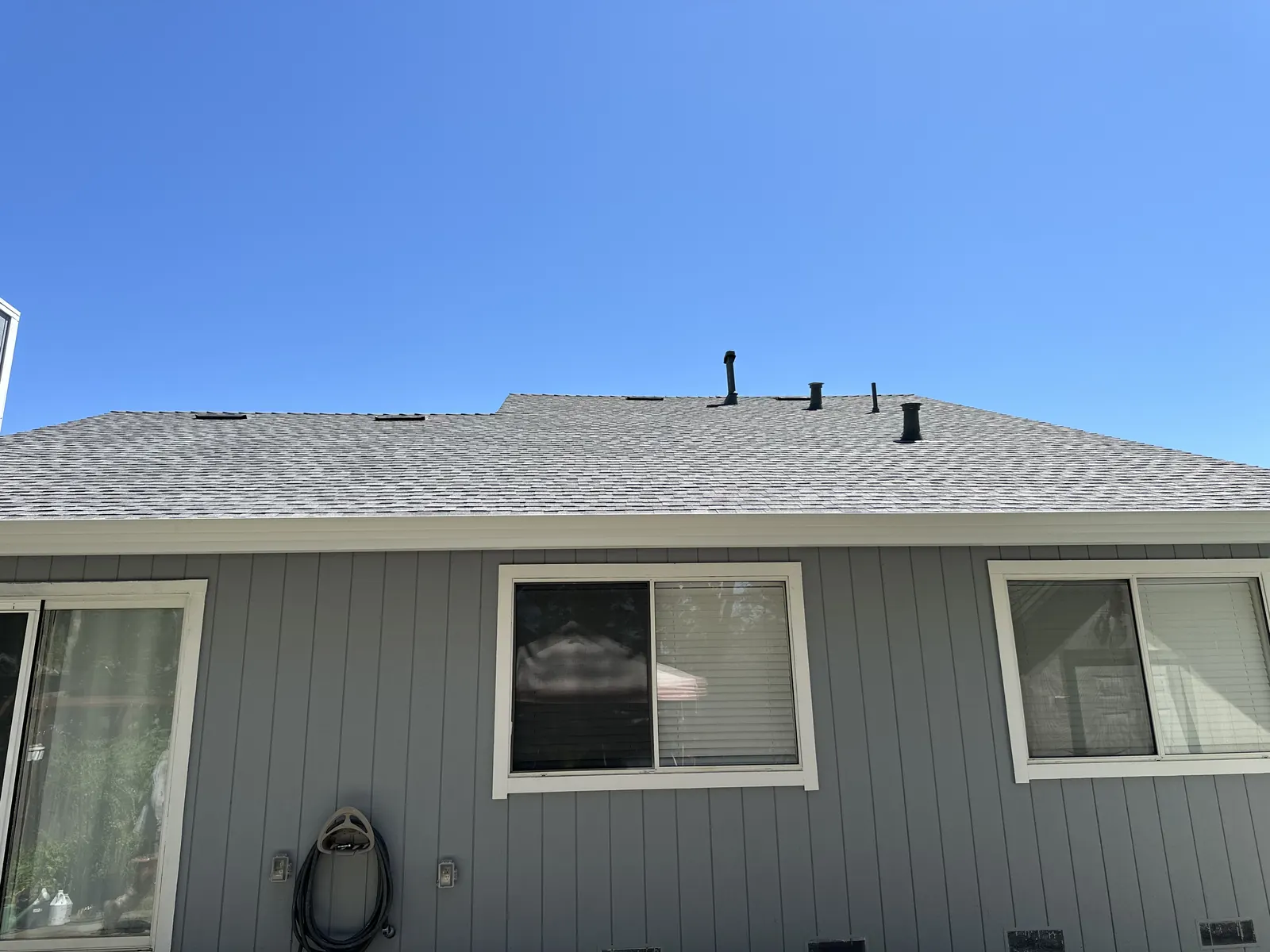
Count the vents from the ground and ask what the intake side looks like. More detail in our guide to roof ventilation.
4. Drip edge and the low-slope transitions
Drip edge is the metal that carries water off the deck and into the gutter instead of behind it. It is code, it is inexpensive, and it is skipped constantly. Watch the low-slope sections especially — porch and garage roofs shed water slowly, so any sloppy transition there shows up as rot in the fascia long before you see a ceiling stain.
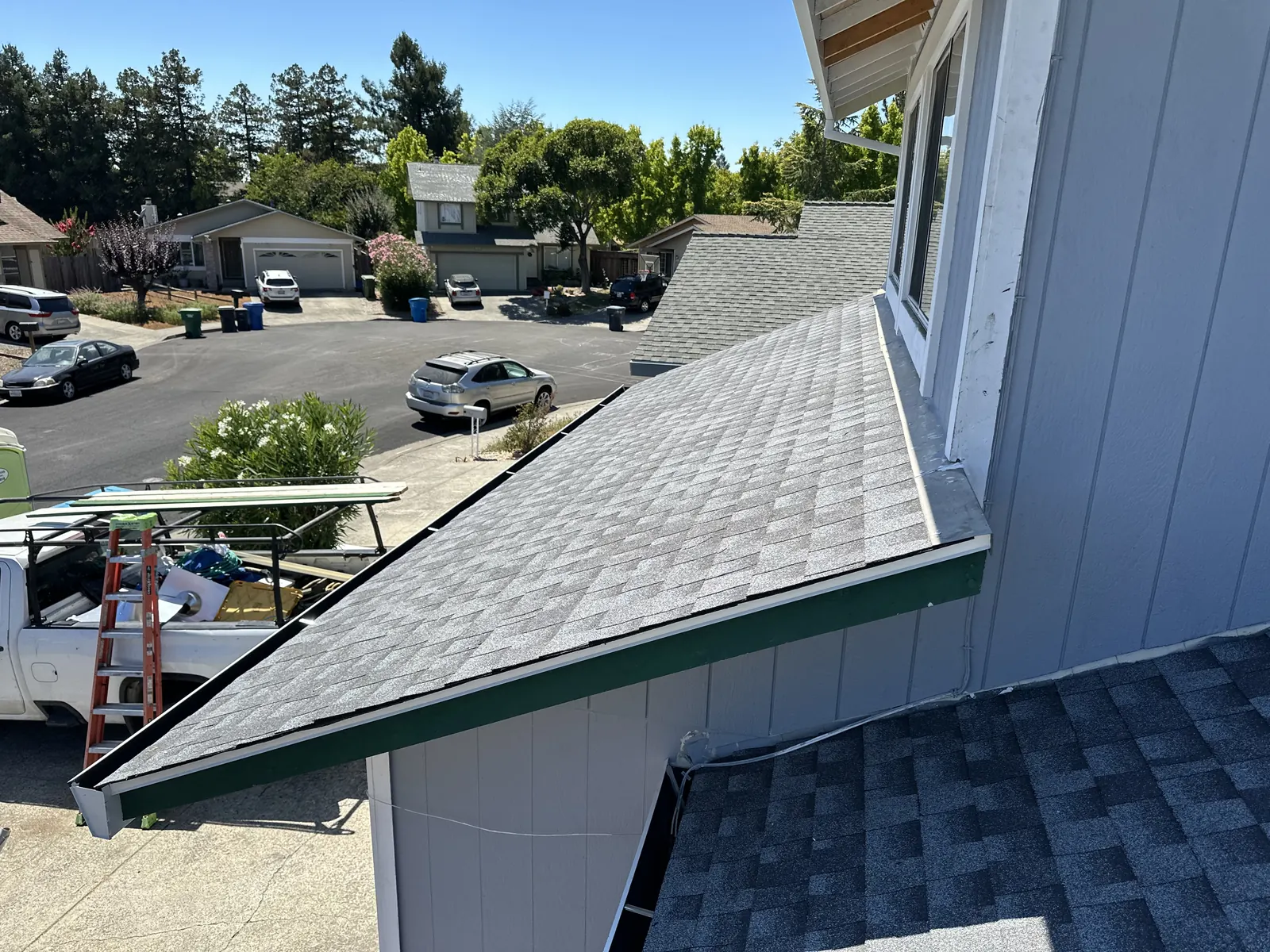
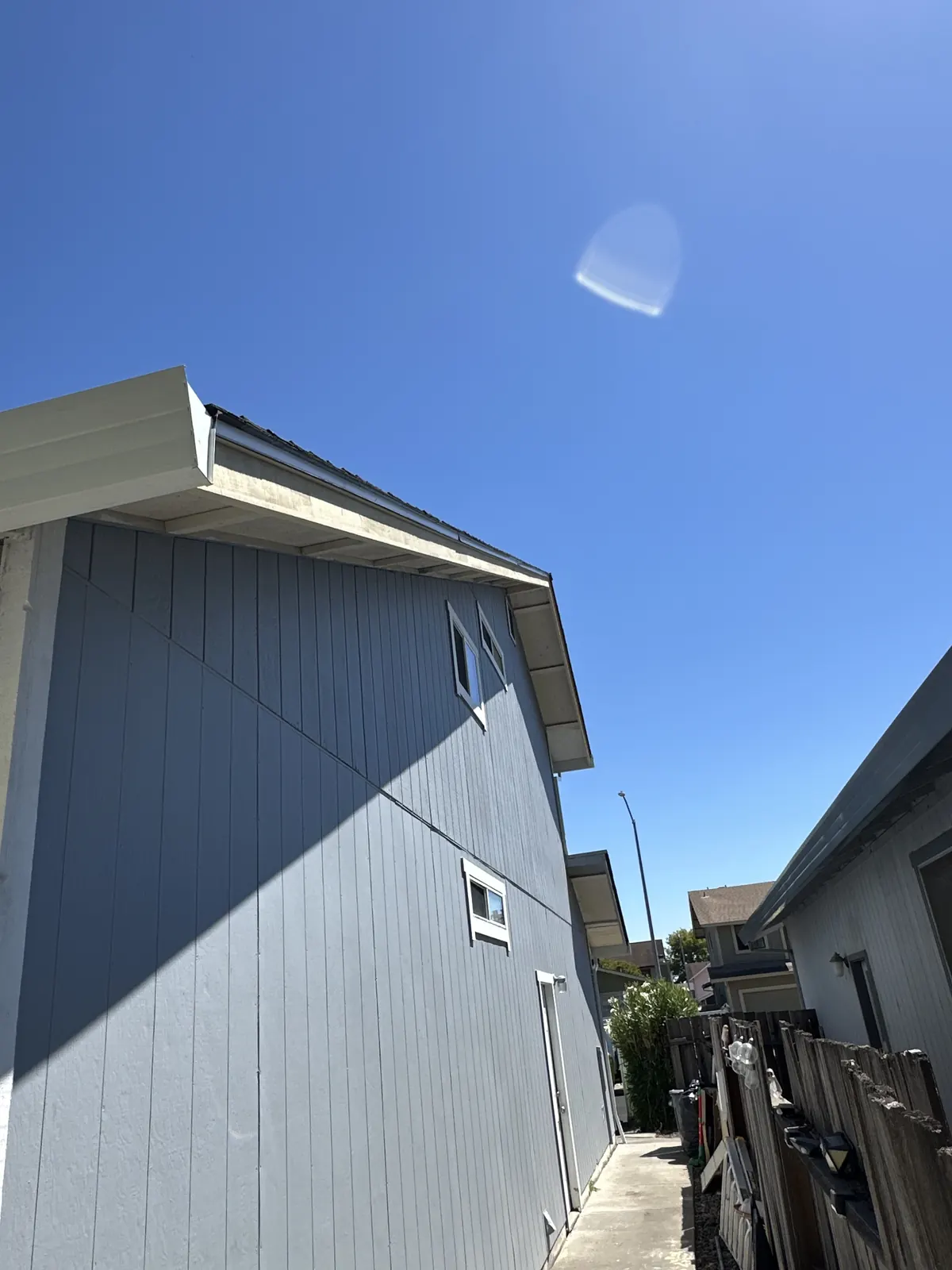
The same detail carries down the rake, where the drip edge, fascia and gutters all have to work as one assembly.
5. Dormers, valleys and anything that interrupts a plane
Straight runs of shingle are the easy part. The money is in the interruptions — dormer cheeks, valleys where two planes drain together, and the sidewall flashing where a roof meets vertical siding. Those details separate a crew that knows Sonoma County's winter atmospheric rivers from one that does not.
6. The job site when the crew leaves
This one you can judge without a ladder. A tear-off produces an enormous volume of debris and thousands of nails. A professional crew tarps the landscaping, loads debris as it goes, magnet-sweeps the driveway and lawn, and leaves the property usable the same evening.
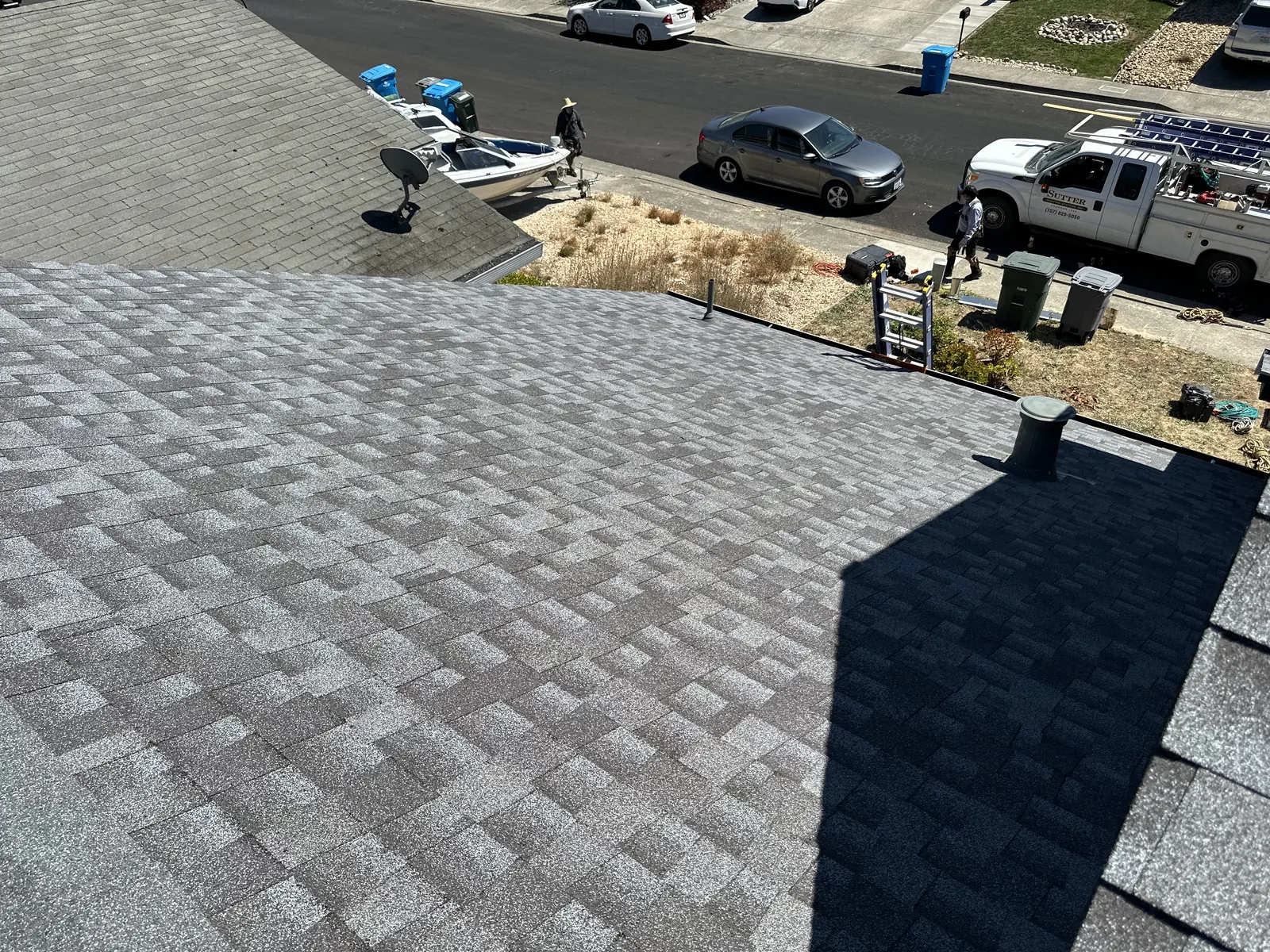
Walk the perimeter before you sign off. Check the gutters for shingle granules and offcuts, and check the lawn for nails. It is the clearest signal of how the rest of the job was run.
Why this matters in Rohnert Park specifically
Rohnert Park was built fast and built at once. Whole sections went up in the late 1960s and 1970s with similar rooflines, similar pitches, and original roofs that all reached the end of their service life within a few years of each other.
That is good news and bad news. Good: the work is well understood, and a crew that has done a dozen of these knows the framing before it opens the roof. Bad: it makes the neighborhood a magnet for out-of-area storm chasers who quote low, skip the boots and drip edge, and are unreachable when a warranty claim shows up.
- Get the CSLB license number and verify it is active before you sign
- Make sure new boots, flashings and drip edge are itemized, not assumed
- Confirm a full manufacturer system and a written workmanship warranty
- Ask for a written, itemized estimate after a real site walk, never a phone quote
Sutter Roofing Systems has roofed Sonoma County since 1986 — licensed and insured, GAF-certified systems, written workmanship warranties, and job sites we leave cleaner than we found them. If you want the layer-by-layer version of what goes on under those shingles, read our Sonoma roof replacement walkthrough or the behind-the-scenes look at a real job.
Thinking about a new roof in Rohnert Park?
Get a free, written estimate from a licensed local crew — no verbal pricing, no pressure, and a real look at your decking before anything gets covered.
Book Free Roof Inspection › or call (707) 829-5050Frequently Asked Questions
How long does a roof replacement take in Rohnert Park?
Most Rohnert Park tract homes are a two-to-four-day job: tear-off and any decking repair on day one, underlayment and shingles over the following days, then cleanup and a final walk. Two-story homes, steeper pitches and rotted decking add time.
How do I know my new roof was installed correctly?
Sight down the ridge and hip lines for straightness, confirm every vent pipe got a new boot rather than fresh sealant on an old one, check that drip edge runs along the eaves and rakes, and walk the perimeter for leftover nails and debris. A roof inspection gives you a documented second opinion if anything looks off.
Do Rohnert Park homes need their roof decking replaced?
Sometimes, and you only know once the old roof is off. On original 1970s tract roofs we most often find isolated soft spots around penetrations and along eaves rather than wholesale rot. We replace what is bad, re-nail the rest to code, and show you the deck before it is covered.
What does a roof replacement cost in Rohnert Park?
$12,000-$45,000 for most Sonoma County homes depending on size, pitch, material, and how much decking needs replacing. We give written, itemized estimates after a real site walk — no verbal pricing, no surprise charges.