By Sutter Roofing Systems · 2026-08-23 · 6 min read
Plenty of roofing companies will quote a manufactured home. Fewer have actually done one. It is not a smaller version of a house re-roof — the structure, the pitch, the access and the details are all different, and getting that wrong is how a "cheap" mobile home roof turns into a ceiling stain by the first winter.
We recently finished a re-roof at a manufactured-home community in Healdsburg. Here is what actually changes when the home is manufactured rather than stick-built, using photos from that job.
1. Weight is a real constraint, not a footnote
A stick-built roof deck is designed with enormous margin. A manufactured home's roof structure is engineered lean — lighter trusses, thinner sheathing, longer unsupported spans. That rules out the heavy assemblies you can throw at a conventional house: no concrete tile, no slate, and usually no stacking a second layer over the existing roof.
Architectural asphalt shingles over a properly prepared deck are the workhorse for a reason — a good strength-to-weight ratio, a long service life, and a system a manufacturer will actually warranty.
2. The pitch is shallower, so the water moves slower
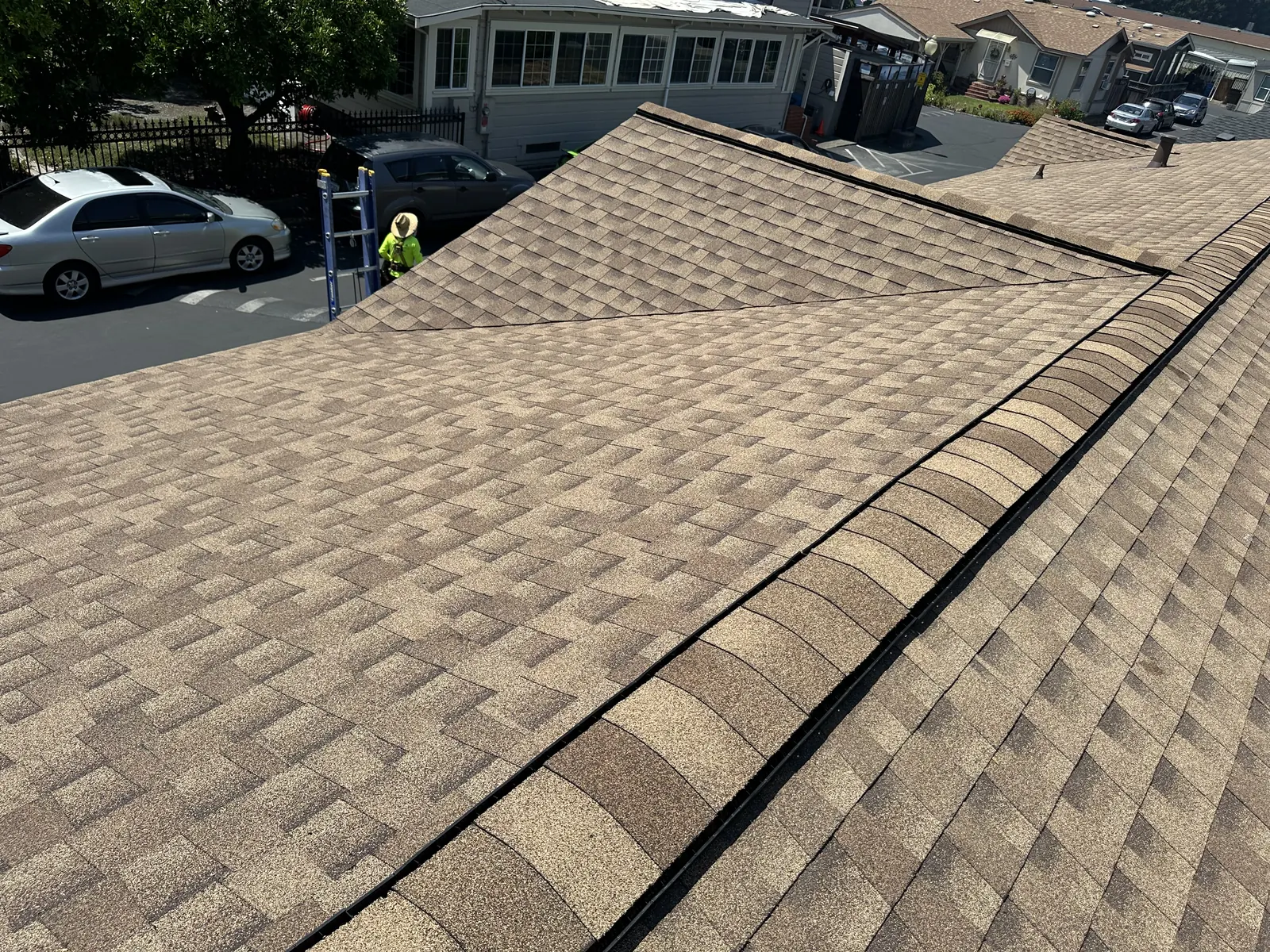
Manufactured homes typically run a much lower pitch than a conventional roof. Shallow pitch means water drains slowly, sits longer, and finds any weakness with time it would never have on a steep slope. Wind-driven rain can also push water up under courses on a low pitch.
That changes the underlayment spec and the lap details, and it makes the transitions non-negotiable. A crew used to steep-slope work that installs a low-slope roof the same way will get away with it until the first serious storm.
3. Metal awnings, carports and add-ons everywhere
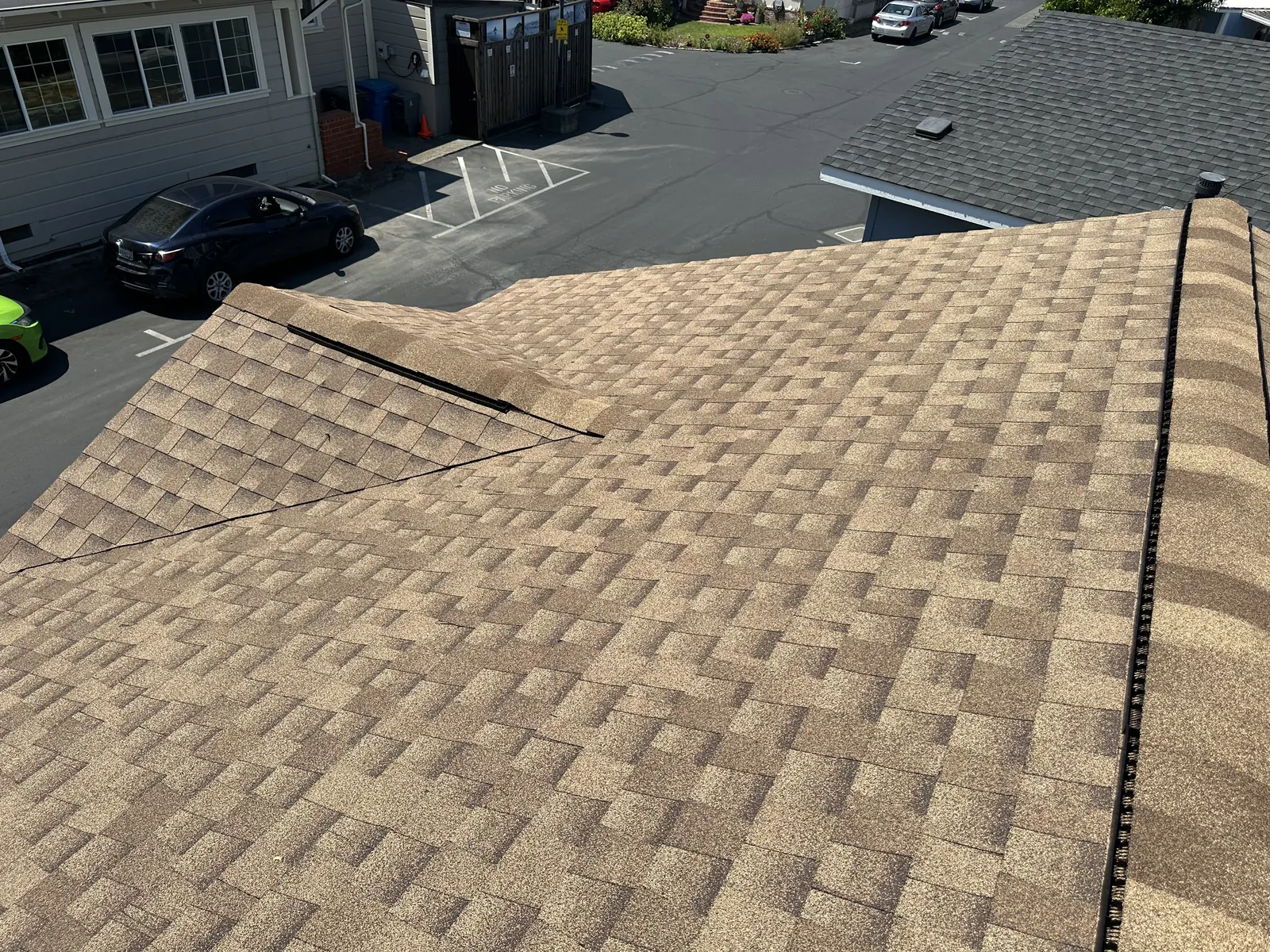
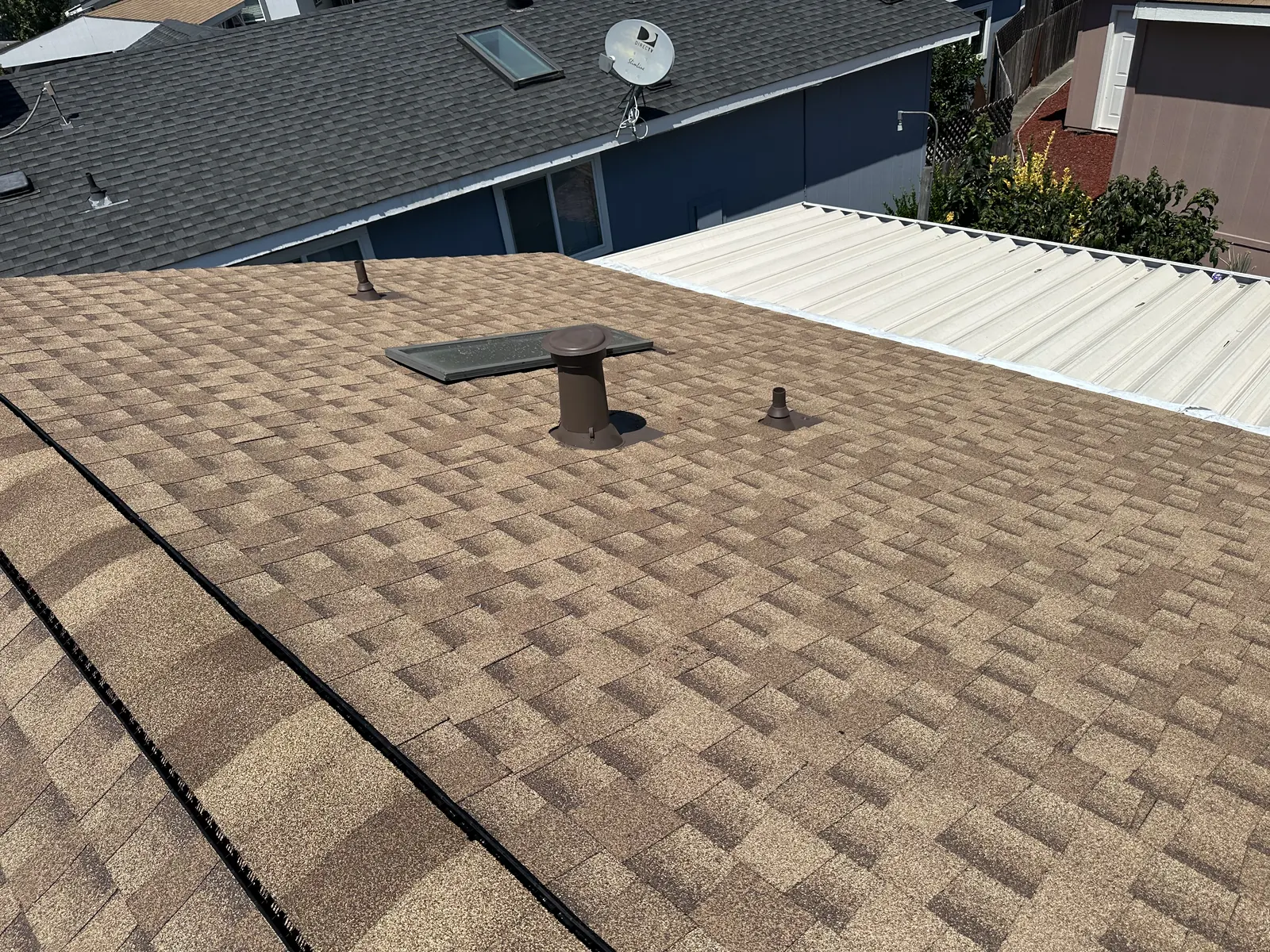
This is the detail that separates crews. Manufactured homes almost always have metal awning roofs, carports, porch covers or park-added rooms butting into the main roof. Every one of those is a dissimilar-material transition — asphalt shingle meeting formed metal — and the two move differently as they heat and cool.
Detail it properly and it stays dry for the life of the roof. Run the shingles up to it and seal the gap with a tube of caulk, and you have bought roughly two summers before the sealant cracks.
4. Vents and penetrations are closer together
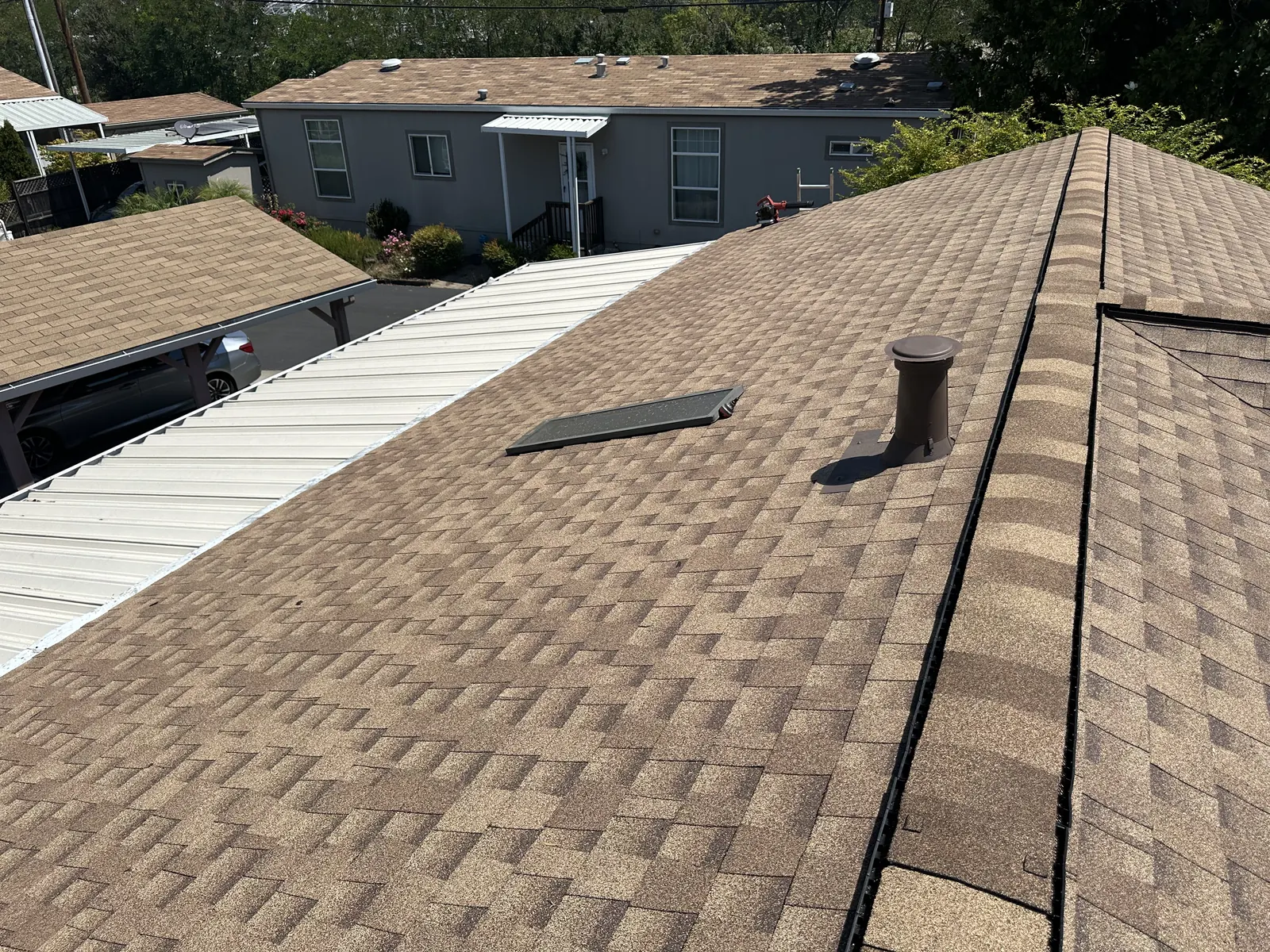
Less roof area, same number of plumbing vents, range hoods and furnace flues — so penetrations are packed tighter and a larger share of the roof is "detail" rather than open field. Each one needs a new boot and correct flashing, and on a low pitch there is less room for error in how each is woven into the courses.
5. Park access changes how the job runs
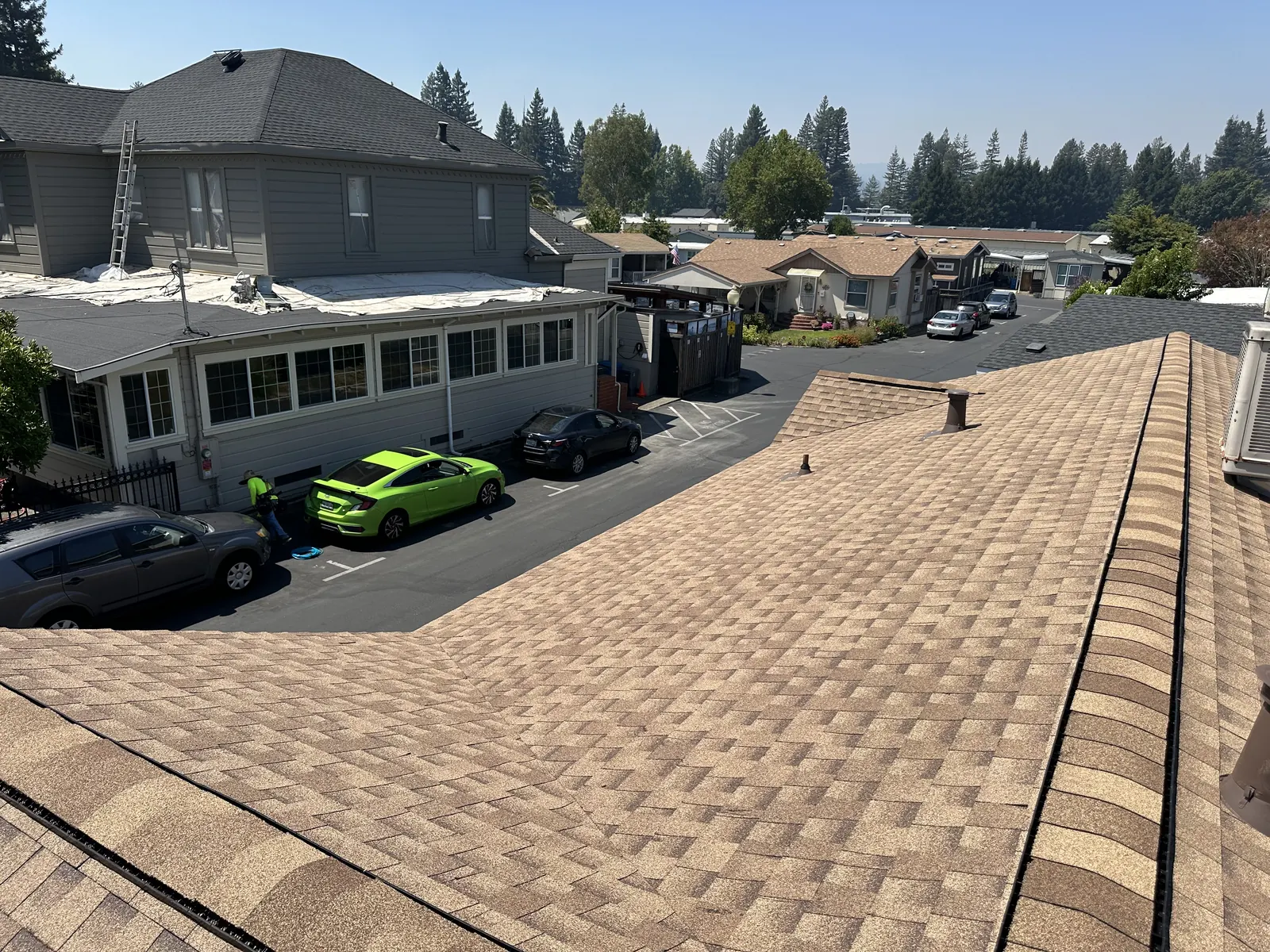
In a manufactured-home community your neighbours are a few feet away, the roads are narrow, parking is assigned and there is often no room to stage a dumpster next to the unit. That is a logistics problem, and it is the one most out-of-area crews underestimate.
It means tighter debris control, hauling material further by hand, keeping shared drives clear, and working within park rules and hours. Ask any contractor bidding your unit how they plan to stage material and haul debris. If they have not thought about it, they have not done many of these.
What to ask before you sign
- Have you re-roofed manufactured homes specifically — and can you show me one?
- What underlayment are you using for this pitch, and why that one?
- How will you detail the awning and carport transitions? (Listen for flashing, not sealant.)
- Are new vent boots and flashings itemized on the estimate?
- How will you stage material and haul debris within the park?
- Is your CSLB license active, and are you insured for work inside the community?
Sutter Roofing Systems has roofed Sonoma County since 1986 — licensed and insured, written workmanship warranties, and job sites we leave cleaner than we found them. We work on manufactured and mobile homes across Healdsburg, Santa Rosa, Rohnert Park, Sebastopol and the rest of the county. For the conventional-home version of this walkthrough, see what a finished roof should look like.
Need a manufactured or mobile home roof quoted?
Free, written estimate from a licensed local crew that has actually done these — including a plan for staging and debris inside your park.
Book Free Roof Inspection › or call (707) 829-5050Frequently Asked Questions
Can you put regular shingles on a mobile home?
Usually yes. Architectural asphalt shingles are the most common choice for manufactured homes with a pitched roof, because the strength-to-weight ratio suits a lighter roof structure. What matters is that the deck is sound and the underlayment is specified for the actual pitch. Heavy materials like concrete tile are generally not an option.
How long does a manufactured home re-roof take?
Often one to two days — the roof area is smaller than a typical house. Park access, awning and carport transitions, and any decking repair are what extend it. We give you a schedule up front so you can arrange parking and access with the community.
Do you work inside manufactured-home communities?
Yes. We work within park rules and hours, keep shared roads and neighbouring spaces clear, control debris as we go, and magnet-sweep before leaving. If your community requires proof of license and insurance before work starts, we provide it.
Why does my mobile home roof leak at the awning?
Because it is a dissimilar-material joint on a low pitch, and it is frequently sealed with caulk instead of flashed. Asphalt shingle and formed metal expand at different rates, so sealant at that seam cracks within a couple of seasons. It needs a flashed detail that lets the two materials move independently while still shedding water.